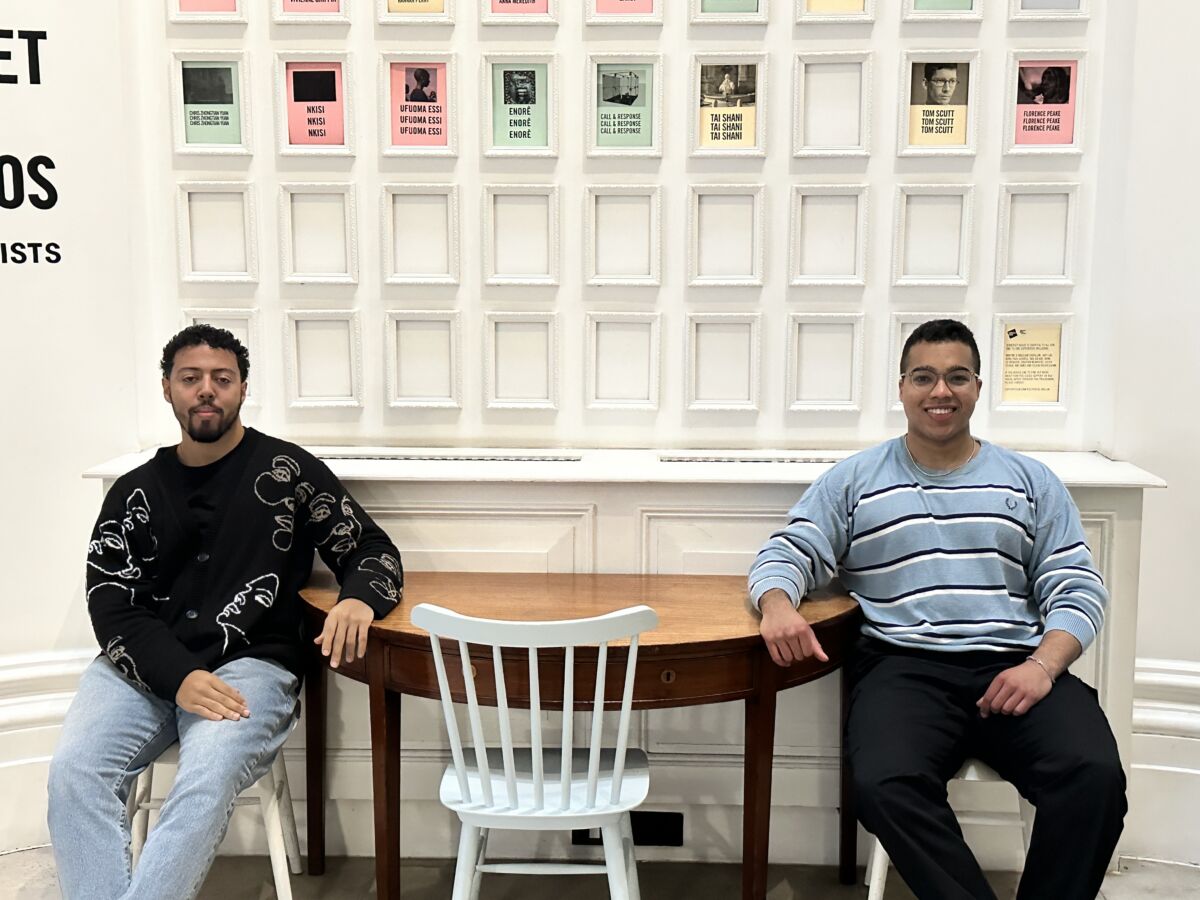
Jamarly Wright, of Jamaican and Turkish Cypriot descent, is a fervent advocate for Pan-Africanism and a powerhouse for social change. With a rich academic background in Psychology, Law, Applied Science, and a BSC in Criminology and Sociology, Jamarly’s approach to life is deeply rooted in his passion for community and cultural identity. His journey has taken him from the creative arenas of photography and videography to impactful social work aimed at bolstering the Black business economy in the UK. At the heart of his endeavours lies Re-Collect, an initiative born from his ideology and love for culture, designed to bring back the essence of African collectivism lost in the diaspora’s assimilation into Western individualism.
Jamarly, it’s a pleasure to see you again and I’m glad we get to be here. Now that the folks have read a bit about who you are, let’s go into a bit more detail. Tell us about Re-Collect.
Re-Collect is short for Restore Collectivism. Its target audience is the West African and Caribbean diaspora. As I’m sure you understand, the more we’ve assimilated into Western culture, the more we’ve lost touch with our native values of community and collectivism. We’ve assimilated into the Western mode of conduct which is highly individualistic. This means we’ve lost, sort of our, village structure. And the outcomes of that are visible in the attainment gap[1] This isn’t consistent with or linear across the Diaspora – Caribbeans appear to be more affected by this than Africans.
As we’ve assimilated into the UK, we’ve lost touch with our core values. Re-Collect seeks to reinstate them into our identity, via us getting back in touch with our history and traditional practices.
I grew up in Nigeria and go back often. Whenever I do, that difference between a collective norm and an individual norm is palpable. I think it’s really valuable that you’re doing your part to draw attention to that and start bridging those gaps.
So, Re-Collect is in Phase 1 of 3 at the moment.
Yes. I’m glad you studied, haha!
I try. The primary method of Phase 1’s content so far has been in the format of street interviews. How did this all come about? What led you to the street interview format?
As an African or Caribbean in the West, you have this experience of something’s not right, something’s missing. You’re conscious of the issues that pervade our culture, such as why aren’t we cohesive? That’s what inspired Re-Collect in the first place.
But before I can put that message out there, before I can try and help reconstruct our culture, I need to build a community first, right? The first phase of that is outreach. Phase 1 is meant to be sort of, provocative, if you will. The whole objective is to get us to acknowledge that we’ve got a problem right now.
To say to people, “This is the state of contemporary Black Western culture, at least in the UK; this is what we’ve got going on over here. Are you aware of this?” Let’s ask some questions that people might not be thinking of. Like, what does it even mean to be Black? Who even determines that? Who even created that category for us?
Let’s get people thinking, “What is the current state of us? Who even applied these labels and features to us? How many of those are truly native to us?” Because you’ll find differences in the black experience between the diaspora and back home. I’ll give you one example. Often older Caribbean generations in the UK would reject their African ancestry and their heritage. When I went back to Jamaica, I found that they claim it heavy. They love it, they love everything, they love the music. It’s such a huge contradiction between here and there.
Another part of why I chose street interviews, is that I also need to get a taste of where we’re at. Which is why I’m doing a national tour, that’s what Phase 1 is. You’ll see me up in Nottingham, in Birmingham, anywhere there is a black population. Another aspect of Phase 1 is the private interviews, specifically with people in positions of success, Black people who broaden our horizons and the scope of what we can achieve. To show that these are lanes you can take as well, Black looks like more than just music and sports.
Well said and you’ve made many astute observations. I could talk about how arbitrary the whole Black/White narrative is and how certain groups didn’t even qualify as White until recent history.
Yeah, the Italians[2].
It seems you’ve studied as well. It’s good that you’re aware of so much, I’m looking forward to seeing how this all develops. Am I allowed to know what Phases 2 and 3 will look like?
Phase 2 is actually what I wanted to do from the beginning, it’s Cultural Reconstruction. In essence, it’s planting positive seeds in Black culture, seeds of community and collectivism, and letting them grow into household features.
I want to achieve Cultural Reconstruction; there’s a long list of things in that. For example, Tip Your Auntie. Without aunties, many black households don’t function. They often take on blue-collar work to supplement income while children are attaining higher education. I want us to understand that they’re our backbone. Any aunty, any woman you see doing their part in the community, in the culture. Try to give them a tip, and they’ll reject it because they’re very prideful. But it shows that we recognize what they do. That’s just one small idea, planting seeds that will become the essence of our culture 100 years from now.
Phase 3 is Reconnection. Taking the diaspora in the West and doing guided trips back to Africa, to the Caribbean. To re-instill that sense of connection and remind people that not too long ago, we all came from African countries.
What if we connected the Western-trained diaspora with the many qualified individuals on the continent and established trade? A lot of the loopholes, the shadowy deals that happen behind the scenes wouldn’t be able to happen. We could accrue a lot of power to make sure we trade on our terms.
Phase 3 also entails a curriculum. For instance, if you’re of Black heritage it should be mandatory to learn one to two African languages.
You’re a revolutionary, do you know that?
We shall see.
You were planning this all for a long time. What did that look like behind the scenes?
I started with photography. Through photography, I was exposed to fashion, and I delved into videography and short filmmaking. I was in a position to tell stories, impact people’s self-perceptions. But my impact was low – I was a baby in this huge mass media world.
I always knew changing our self-perception was the goal, and photography was just a medium to achieve it. In 2022 I met a man named Akil. He’s my mentor and one of the most impactful men in my life. In the wake of Black Lives Matter, so many Black-oriented organizations who could impact the culture were born. Akil was the first man I saw achieving that impact and had a job doing it. He has this organization called DOES[3], a social impact organization, which I’ve been involved with for the last two years. Working with large corporations to provide funding, workspaces, mentorships, advertising, etc. Through that work, I picked up a whole host of skills, which expanded my horizons and showed me how I could change the culture.
I started taking notes. I looked at how Akil created a job that didn’t exist before to achieve the change he wanted to make. Building Re-Collect behind the scenes was being exposed to all these different Black businesspeople and creatives, knowing I wanted to make a change and I’m going to need all these people to do it. The idea formed as I worked on various projects, working with Channel 4, Lloyds, and Somerset House, learning how to get a message out there.
My degree (I studied Sociology) helped me understand the power of culture. Culture is the way. A lot of people think that progression for Black people means improved finances and more access to opportunities. You can have that, but if you don’t have a grasp on identity, aren’t cohesive, don’t have a mission, then the money just filters out of our economy into other cultures. If we aren’t cohesive and we try to move forward individually, we just move away from each other.
The term Restore Collectivism runs through everything you’ve talked about. It’s the classic thing, divided we fall, or in this case, divided we don’t stand as high. What motivated you to plan so meticulously?
It’s because I have a personal stake in it.
Which may be hard to believe because I’m of mixed heritage. I am the product of a single-parent household, and we weren’t connected to our extended family. It was hard growing up in a single-parent household, with three siblings in South London, that looks like extreme vulnerability. A lot of hustling, a lot of sadness. My mum was very alone and had to deal with a lot. We were subject to a lot of negative forces around us. Growing up without a father, I had to navigate learning what masculinity was. There are many times I could have fallen into prison because I didn’t have a guiding framework.
I didn’t love myself, despite being of mixed heritage and light skin. When I was 7 and moved out to Essex, I was one of two Black people in my entire school. I was made to feel terrible because of it. Right up until I was about 16, I did not love my skin colour; I felt like a second class citizen.
When I was 20, I joined the Afro-Caribbean Society at my university. I found myself associating with talented, multi-faceted, well-spoken Black people. All of a sudden Black became more than rapper or athlete. All of a sudden, I’m seeing people who want to become doctors, politicians, and community developers. At one of my first debate nights at ACS, I was just looking around with my mouth open, feeling so happy to be “me” in this environment and thinking, “I need to take this home. More people need this, I need some of this everywhere, everyone needs to see this. If everyone knew how beautiful and amazing, we were, imagine what we could change.”
What advice would you give to other young Black people who want to make a difference in the world?
Lord. I was gonna be really cheesy and say just start, because it’s not like I’ve made it too far. I’m still in the very early stages even though I’ve been thinking about this for years. I’d say consolidate why you’re doing this; you need to know your “why”. You need to have clear core values because you need to fall back on those when times get tough.
The best advice my mentor ever gave me was: “There’s only so much foresight you can have.” You’re never going to get it all right, so just keep going and stay consistent. Collect advice from your peers, and constantly re-examine yourself so you can evolve. But make sure you have those core values so that even when you need to pivot or make a change, you don’t lose yourself.
That’s what I’d say: know your core values then just start.
Beyond Restore-Collectivism, in one word or sentence, what do you, Jamarly Wright, stand for?
Community, and the freedom to enact your purpose.
That’s beautiful. I can see those reflected in the work that you do. Those are the most revolutionary values anyone could ever have. In a time where division is the norm, community is a revolutionary act.
Boy, that’s a bar!
I try.
Find Jamarly and Re-Collect on Instagram here:
[1] “Pre-Pandemic, the pass rate for pupils from the Black major ethnic group was the lowest of any major ethnic group. Black African pupils generally fare better than Black Caribbean pupils.”
[2] See “Italian Americans” & “racial categories that people mistakenly view as matters of biology grow out of highly politicised myth-making”
This article was first published on pan-African.