Reducing Inequalities. Decolonizing Africa’s Literary Trail
“Language is not only a means of communication but the foundation of identity, dignity, and full participation in society. Which is precisely what human rights were created to protect.
UNESCO, Language Vitality and Endangerment Framework
This article honours two East Africans whose lives made the African book more equal, more inclusive and more rooted in her people’s languages. The work of Kenya’s Ngũgĩ wa Thiong’o and Henry Chakava embodies inclusive and equitable education (SDG 4), reduced inequalities (SDG 10) and sustainable cultural heritage (SDGs 11 & 16).
The 2019 IPA Nairobi Seminar, Africa Rising & I Will Marry When I Want
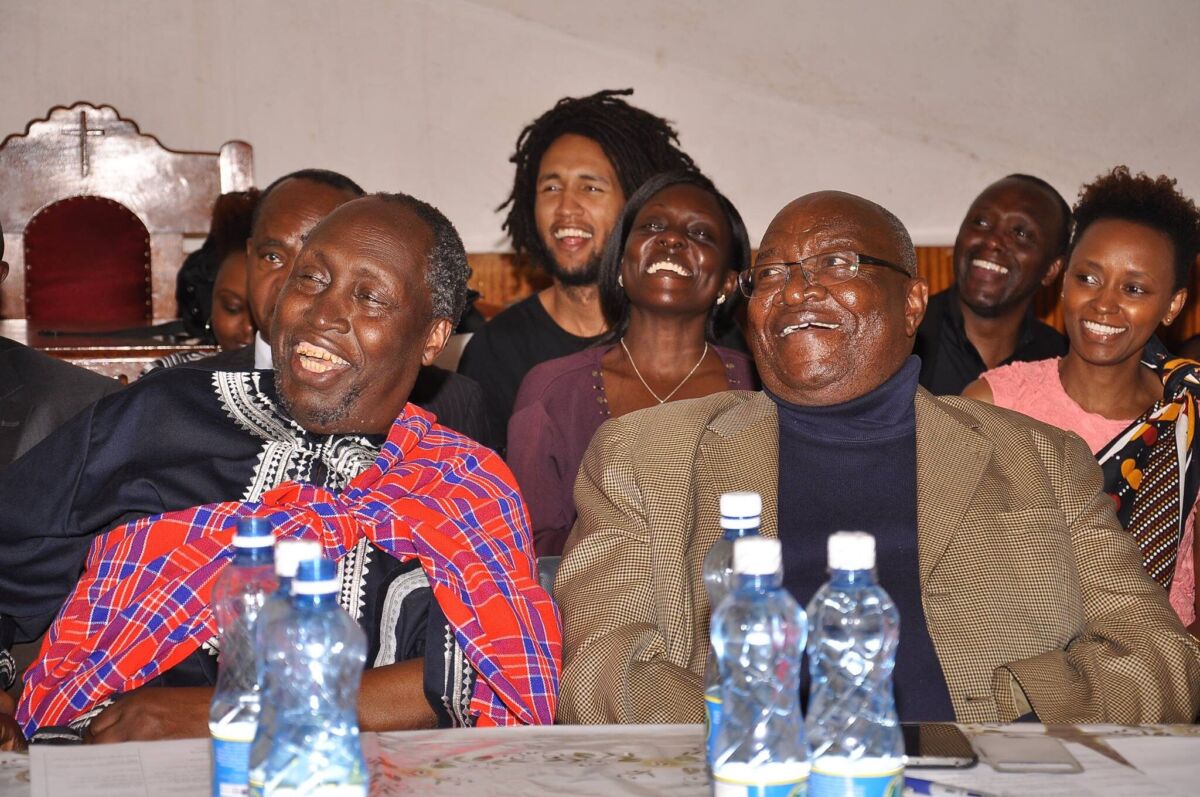
In June 2019, I attended a seminar in Nairobi hosted by the International Publishers Association (IPA). Titled Africa Rising, if you were to ask what I took away from that event, I would say the wealth of insights imparted by two patriarchs of the African book industry: Ngũgĩ wa Thiong’o, world-renowned author, scholar and decolonization activist, and Dr. Henry Chakava of East African Educational Publishers (EAEP).
The elderly men had difficulty standing for long periods, but age had not extinguished the fire in their bellies. They were vigorous in their presentations, chronicling efforts to which they had dedicated their lives in order to see indigenous African languages restored to the centrality of African life.
Readers new to the mother tongue versus colonial language debate might ask: what makes the restoration of mother tongues worth dedicating a life to? Cultural pride is a real justification, true, but are there other reasons worth dying—or worse—worth being incarcerated for?
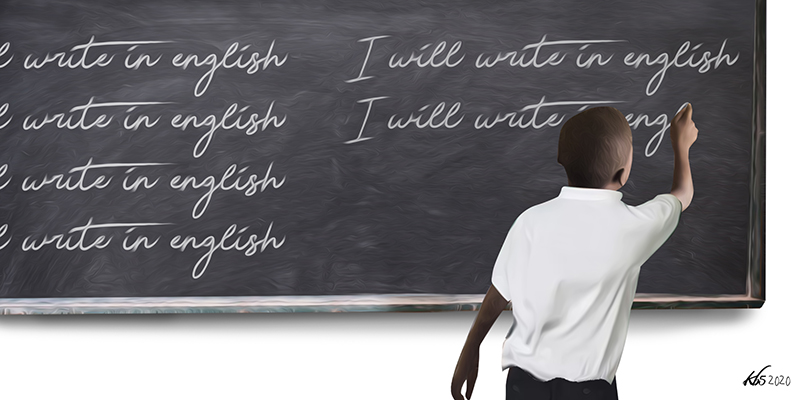
Published by Henry Chakava, Ngaahika Ndeenda (I Will Marry When I Want) was the first play Ngũgĩ wa Thiong’o wrote in his mother tongue, Gikuyu. By this act, the play reversed the exclusion of multitudes of Kenyans locked out of public discourse and governance by a colonial language that regulated a land they once called their own. The play’s attack on land injustice, post-independence inequality, and corrupt Kenyan elites—heirs of the British colonial system—reached the masses. Ngũgĩ’s arrest and detention without trial followed. For taking this radical stand for political, social, and economic equity, the government punished him further – incarcerating him for one year.
Decolonizing the Mind: The Politics of Language in African Literature is an iconic collection of essays and arguably Ngũgĩ’s best-known work. In it, he asserts that suppressing indigenous languages was the most devastating form of violence perpetrated by colonizers. Mother tongues are organic vehicles—repositories of our knowledge systems and worldviews. To discredit and replace them with colonial languages represented an epistemic violence that cut us off from our heritage, unleashed economic disparities, and entrenched poverty. For those who didn’t speak colonial languages, political disenfranchisement followed.
“To deny a people their language is to deny them access to culture, justice, education, and political voice. The very rights the modern human rights project exists to safeguard.”
Gory Gory Hallelujah! & The Upright Revolution
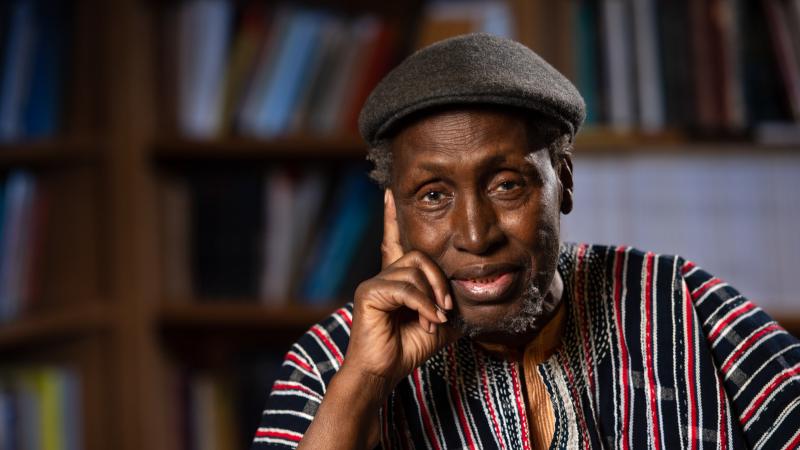
This summary sheds light on Ngũgĩ wa Thiong’o and Henry Chakava’s lifelong crusade for the restoration of indigenous languages and the dismantling of inequities resulting from their suppression. Those inequities persist today. It sets the context for what we were about to hear from the two elderly men that evening in the Great Hall of the Mövenpick Hotel, Nairobi, and the youth who carry their mantle. One of them, Munyao Kilolo of the pan-African writers’ collective, Jalada Africa, would be invited to mount the stage, holding high the flaming torch of mission.
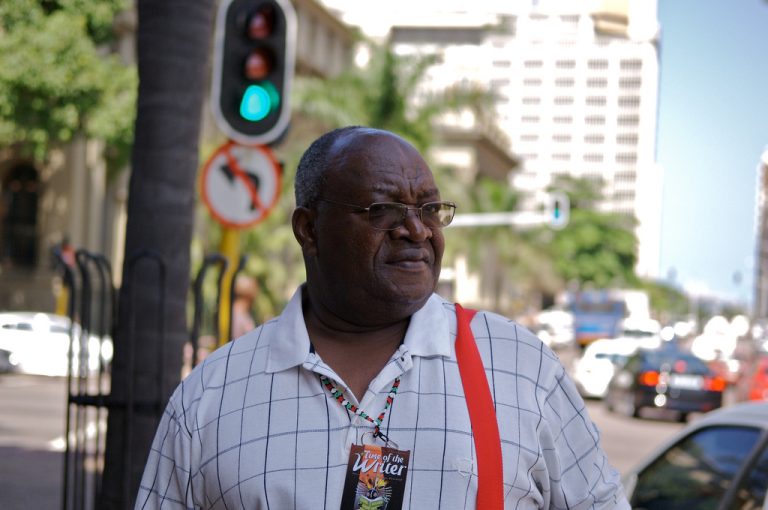
Brian Wafawarova, past President of the Publishers Association of South Africa (PASA), has written touchingly about what the intergenerational mix of people who attended that seminar meant to him, and how it enriched the event. Even at the time, but especially now that they have left the world, for most of us convened at the Mövenpick Hotel, the presence of the two elders reminded us that Africa’s literary renaissance rests on the shoulders of those who fought for linguistic justice.
Peering through the dusty lens of the past—six years now—I can see Ngũgĩ wa Thiong’o with a dreadlocked young man who suddenly appeared – from nowhere – to join him on stage. It was hilarious—the pair of them – bursting into song, bellowing the chorus Glory Glory Hallelujah! and its parody, Gory Gory Hallelujah! What on earth was going on? Then it clicked: the astonishingly loud noise they were making was a cacophonous case for smashing a hierarchy of languages—one that prioritizes colonial tongues while insulting our own.
Now, in my mind’s eye, I see Ngũgĩ calling out to another young man in the audience – a bespectacled man. Munyao Kilolo of the Jalada Collective. He comes on stage and once there, presents – in PowerPoint – a feat so wondrous, it has made literary history.
Translated by Jalada, The Upright Revolution by Ngũgĩ wa Thiong’o is reported to be the world’s most translated short story with what in 2019 were 63 translations—47 of them in African languages. Today, in 2025, there are 92 translations in total, with licensing rights for interpretations procured for drama, song, and visual art adaptations.
With The Upright Revolution, the younger generation of Kenyan creators have demonstrated a capacity to sustain their nation’s rise as a cultural force beyond the lifetimes of the two tireless pioneers.
The Mantle Bearers
Let me briefly introduce some of the work being done by others in the book ecosystem – part of the constellation of successors to these men. To glimpse their work is to understand the enormous power and influence of the legacy of resistance demonstrated by Ngũgĩ and Chakava, his courageous publisher.
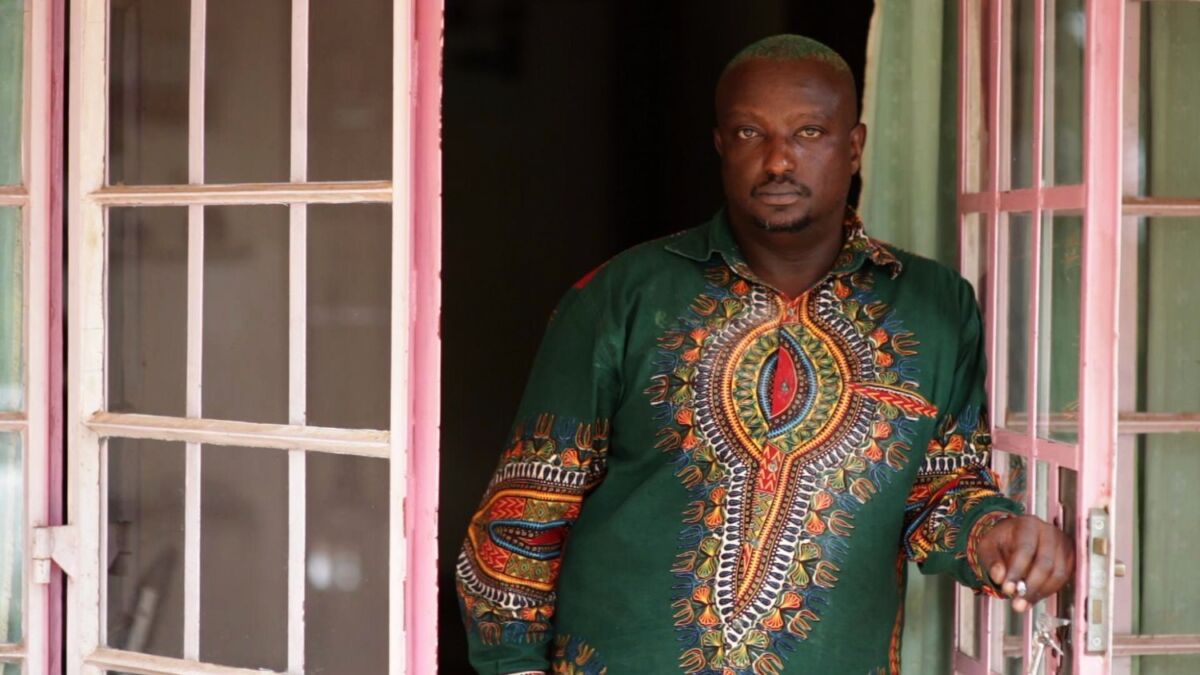
Founded in 2003 by Binyavanga Wainaina, Kwani? carried forward the publishing courage modeled by Ngũgĩ wa Thiong’o and Henry Chakava, nurturing insurgent, boundary-pushing African writing. Though quieter after 2015, it stands as a pillar of Kenya’s literary renaissance and independent publishing legacy.
Another transformative force is Book Bunk Trust which was founded in 2017 by Angela Wachuka and Wanjiru Koinange. The women have partnered with Nairobi City County to restore, repurpose and decolonize historic public libraries – McMillan Memorial, Eastlands, and Kaloleni – transforming them into inclusive, community-centred spaces. While redefining what a contemporary Kenyan library can and should be, these visionary women have also established Bunk Books, the organization’s publishing arm. The project collaborates with African writers and other creatives/content producers to create rich, original children’s content such as Sulwe by actor and children’s writer, Lupita Nyong’o, in English, Kiswahili and Dholuo.
Co-founded by Will Clurman and Matthew Utterback, with Mercy Kirui as senior publishing lead, eKitabu broadens global access to African digital literature through school platforms and digital-library solutions. Rooted in improving reading outcomes for underserved learners, eKitabu pioneers born-accessible digital platforms and develops e-books and learning materials in –so far – Tumbuka, Kinyarwanda, Amharic, Yao and Lomwe.
Founded in 2007 by a collective of Kenyan writers, Storymoja is renowned across Africa for its children’s books, educational texts and reading-materials grounded in East African lives. Convener of the landmark Storymoja Festival, the project lays emphasis on publishing in Kiswahili and developing content rooted in African cultural contexts and local realities.
Brain child of Maïmouna Jallow, writer and dramatist, Positively African Media is a shining exponent of expressions made possible in the digital age. With printed works, performance on stage and film, audio narratives – its stories are curated and disseminated across multiple media. Published by Nairobi-based Paivapo, Story Story, Story Come!, its first, ground-breaking anthology, gathers twelve African folktales re-imagined by writers from across the continent who re-centre oral traditions, myths and cultural heritage in contemporary forms.
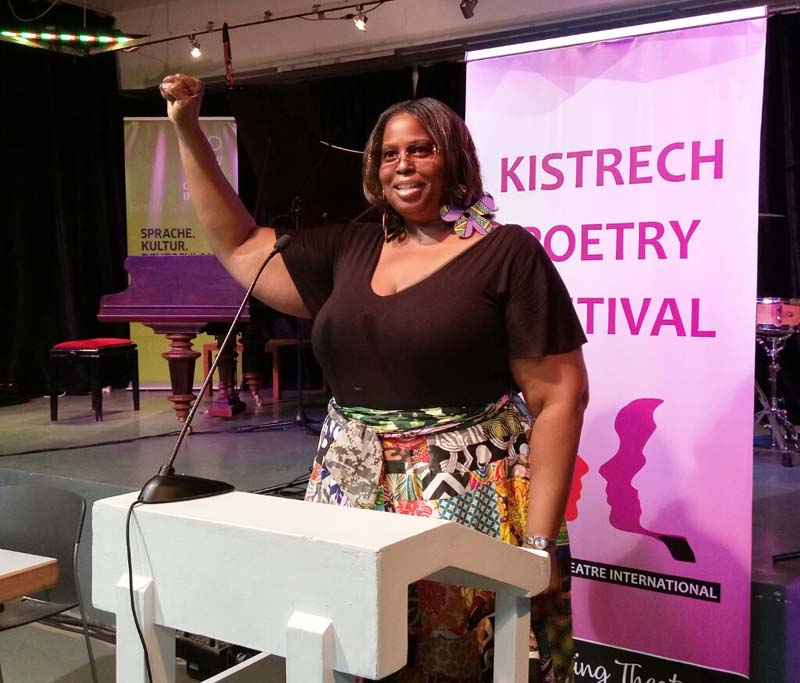
One of the most jubilant inheritors of Ngũgĩ’s creative spirit must be the Kistrech International Poetry Festival. Founded in 2013 by Kenyan writer-scholar Christopher Okemwa, Kistrech unites poets from Kenya and around the world in an annual celebration of performance, mashairi (Swahili poetic forms) and artistic exchange in Kisii, western Kenya. Through poetry mashinani (grassroots, village-level poetry activity) events and stage performances, the festival showcases poetry in local vernaculars alongside Kiswahili and English, keeping indigenous voices and oral traditions at the heart of its programme.
Arguably the most visible inheritor of Ngũgĩ wa Thiong’o’s legacy remains the Safal- Kiswahili Prize for African Literature founded in 2014 by his son, the scholar, Mukoma wa Ngũgĩ and Lizzie Attree, a British scholar and literary activist with – like her partner – a focus on African literature. The Safal-Kiswahili Prize is multi-genre, celebrating excellence in Swahili writing and advocating literacy through African languages.
The successors of Ngũgĩ and Chakava are upholding cultural sustainability – a core concern of SDG 11 (Safe, Resilient & Sustainable Cities and Communities). Through the libraries they start and restore, collectives they form, their emphasis on translations, on multi-genre and multimedia storytelling, they protect Africa’s living heritage.
“We must take our place as part of the network of lingua franca,” declared Ngũgĩ wa Thiong’o at the Africa Rising seminar hosted by the IPA in 2019. The place of African languages, he argued, must be alongside—not instead of—colonial languages. By advocating a network of indigenous, national, and global languages rather than the replacement of one by another, Ngũgĩ sought to prevent new forms of exclusion. Such a rich multilingual network would allow communities to preserve identity and oral heritage while maintaining access to international knowledge, trade, and diplomacy. Hand in hand with global participation, his vision was of a cultural sovereignty anchored in stable systems of governance where languages of mediation—whether colonial or indigenous—could coexist and thrive. He was fiercely insistent that evening, calling for publishers in foreign languages to support the visibility, rather than procure the invisibility of African language publishing. He was, I believe, referring to the kind of publishing pioneered by Henry Chakava, his first – and stalwart – Kenya-based publisher, and to the example set by The Upright Revolution. As an exponent of the power of African mother tongues to expand and enrich global culture, The Upright Revolution – a historic, multi-media revolution in translation and licensing,remainsunmatched.
That Nairobi evening, with his voice still powerful, Ngũgĩ wa Thiong’o spoke beauty into the hearts of the intergenerational crowd gathered for dinner in the hotel’s Great Hall. The essence of that beauty was his rejection of the notion that Africa can rise on English (read colonial) wings.
Epilogue: A Luta Continua: The Next Frontier
But the war for African languages did not end with Ngũgĩ wa Thiong’o and Henry Chakava: it has found a new battlefield – one that seeks ownership not just of our stories, but of the machines that will speak them.
What those two visionaries could not have foreseen was the sheer scale of disruption ushered in by language AI: a new, quieter threat wrapped in the promise of helping us strengthen the resistance that will make African languages – and the knowledge they carry – visible and truly sovereign. But think about it: if AI systems learn, store, and reproduce our languages – if AI learns our idioms and nuances with fluency, these systems will soon be able to write books in our mother tongues and sell these books – in our mother tongues – back to us. And think about this: if identity is inseparable from culture, which it is, and culture inseparable from language, which it is, then this language capture risks a deeper form of dispossession. A dispossession in which our cultural sovereignty is preserved in external datasets that will outlive us, while foreign tech traders continue to sell us fabricated – but saleable – versions of ourselves.
Debates about who speaks for Indigenous communities are not new. Famous Canadian writer, Thomas King, who had long believed and publicly presented himself as part Cherokee, disclosed in 2025 that genealogical review found in him no evidence of Indigenous ancestry. Another famous Canadian writer, Joseph Boyden, fraudulently claimed Nishnawbe identity. With questions swirling around their identities and the ethics of representation – these men’s research centred the Indigenous cause – Canadians were forced to ask a necessary question: who has the right to represent a people’s voice, to represent their stories and idiom and their inner world? Who has that right?
Since its migration to every corner of the earth – including Africa – though wearing new clothes – the question about rights of representation has become urgent – particularly in light of the fact that systems built offshore can perform convincing Indigenous optics and acoustics and thereby profit those who own them.
Our mother tongues are rich, deeply nuanced and layered with idiom. And they are en route to becoming part of AI systems trained on datasets we don’t see and don’t audit. We don’t govern them and we didn’t co-build them.
This is a clarion call to Ngũgĩ and Chakava’s mantle bearers, not only in the East but across all of Africa. It is a call to those of you using technology to create stories across film, stage, and books in African languages. You must urgently extend your tech-driven cultural crusade beyond content production to building our own AI infrastructures. Our own AI infrastructures capable of countering foreign-owned and domiciled language AI. You must also engage deeply with rural communities. They are the living reservoirs of linguistic purity and cultural nuance. Start now. Before these ageing men and women exit the world.
The people of these communities, together with the creators who will serve them, will need to function as buffers, interpreters, and mediators when overseas AI traders land on our shores. They are coming – and coming soon.
And we must keep our data in African hands, build our own AI tools, and hold on to the guardrails in any cooperation with them. We must not behave like automatons, compliantly showing up in councils, congresses and conferences while international merchants stealthily lay claim to the visceral -most valuable- archives of our heritage.
This is not alarmism: it is policy aligned. UN SDG 11 addresses safe, sustainable and resilient cities and communities. It lays emphasis on cultural heritage and controlling African linguistic and cultural datasets protects intangible heritage from extraction and misrepresentation. Further, cultural heritage is protected when indigenous communities have agency, guarding against the erosion of cultural knowledge in global AI systems. SDG 16 addresses peace, justice and the strengthening of institutions. This global goal is well-served by sovereign AI infrastructure. If we build locally, we strengthen institutional capacity and reduce the risk of external manipulation. Building AI infrastructure locally would build public trust and move AI governance towards alignment with community rights. UNESCO’s 2023 Recommendation on AI ethics are key here, prioritizing cultural diversity, fairness and the avoidance of data colonialism. Community agency upholds the Recommendation’s emphasis on human rights, participatory governance and equitable technological benefit.
Much closer to home, the African Union’s Continental AI Strategy calls for technological sovereignty and local value creation. What would this look like in practice? In education, it would look like locally built AI tools for African classrooms, such as language-aware tutors and culturally grounded curricula. This would keep intellectual and economic value within the continent. In the creative industries, it would look like AI models trained on African music, art, and storytelling generating new revenue streams for local creators instead of exporting cultural value to foreign platforms.
Indigenous data agency would strongly support the AU’s commitment to inclusive, human-centred AI. AI that reflects our own social and cultural contexts. Perhaps more inviting than dry tomes of policy documents, is the readable scholarship currently circulating about data colonization, warning us that without local ownership, AI can reproduce the very inequalities it promises to resolve.
So, start building. Start forging community linkages. Only by anchoring technological innovation in community knowledge and ownership, can we safeguard the linguistic sovereignty that Ngũgĩ and Chakava fought so fiercely to restore.
In Memoriam: Ngũgĩ wa Thiong’o (1938–2025) and Henry Chakava (1946–2024).
Olatoun Gabi-Williams – Career Profile
Olatoun Gabi-Williams is a Nigerian journalist, social advocate, and literary activist. She founded Sponsor A Child Nigeria (2003–2015), noted for Building Futures, a Procter & Gamble–funded initiative providing educational and recreational resources in Nigerian care institutions, and The Good Home Scheme, selected by the French Government in Nigeria as its 2014 Human Rights Project. In 2015 she founded Borders Literature for All Nations, which promotes African literature globally and advocates fair-trade publishing, highlighting the community origins of works in indigenous languages. A Guardian Arts (Nigeria) contributor, she also administers the national award-winning Gabi Williams Alzheimer’s Foundation, honouring her late father, Dr. Gabisiu Williams. She is the Founder and Curator of Living Sustainably Here: African Perspectives on the SDGs.
About the African Perspectives Series
The African Perspective Series was launched at the 2022 Nigeria International Book Fair with the first set of commissioned papers written and presented by authors of the UN SDG Book Club African Chapter. The objective of African Perspectives is to have African authors contribute to the global conversation around development challenges afflicting the African continent and to publish these important papers on Borders Literature for all Nations, in the SDG Book Club Africa blog hosted in Stories at UN Namibia, on pan-African.net and other suitable platforms. In this way, our authors’ ideas about the way forward for African development, can reach the widest possible interested audience. The African Perspectives Series is an initiative and property of Borders Literature for all Nations.
This article was first published on pan-African.