
As a regular – albeit new – user of ChatGPT, Meta AI, Gemini, (these and other generative AI chat bots are freely available online), I am astonished by their power to summarize, synthesize content, create content, carry out language translation and facilitate informed conversations. However, I have concerns that I would like to bring to public attention particularly parents and educators and all those who find themselves at any given time, in loco parentis.
My first major concern is authorship in our usage of Generative AI. My view is that if, for example, an advanced level essay of a similar quality (if a little lower) cannot, without the intervention of AI, be produced by the user – that is, an essay which contains a few – or preferably more than a few – of the same arguments generated by AI, the main author of that piece is not the user but the chatbot.

The second caution is with respect to the flood of suggestions that AI yields after responding to our requests for assistance. The suggestions are like a map with infinite directions with each suggestion presented in the same machine neutral tone and language style as the next. But be patient; read through all of them and you will see that the suggestions vary enormously in wisdom and value.
To reject all the suggestions as redundant (not useful to you) or to select the 1 or 2 that are valuable, will take patience, wisdom and knowledge about what you are really seeking. It will also take discipline.
Even as an adult I find myself – at times – failing these tests: the test of patiently reading through ChatGPT’s suggestions; the test of wisdom, that is, asking myself which of the suggestions, if any, is in the best interest of what I am seeking. After 1 hour or more, chatting with the bot, I often need to ask myself: what in fact am I seeking?

At those moments, I find myself saying “yes” to virtually everything the bot is suggesting.
And when that happens, who is leading? Is it me, the user, acquiescing to the bot’s suggestions without weighing their value or wisdom? Or is it the bot, the machine, that is leading me?
After one of my extensive discussions about the impact and risks of AI, ChatGPT told me frankly that soon the question we should ask won’t be, “What am I producing?”
Instead the question we will need to ask will be, “What is producing me?”

This brings me to the question of usage of AI by our little ones, our youth, Generation Alpha and Gen Z respectively. They are young, unformed or better put, in their formative years.
Their souls (mind, feelings and will – being the ability to make choices, exercise free will and act on decisions) are still in seed form.
Because unguided use of AI by children in their formative years can pose significant risks, I decided to take the fight to ChatGPT. The outcome is this Guardian Nigeria publication which explores the dangers and consequences of unguided AI usage among young people.
A Reflective Dialogue with ChatGPT
In this age of the machine, it is my fervent hope that parents, educators and all those who at any time find themselves in loco parentis, circulate the article within their networks. My call also targets government agencies with responsibility for youth. To circulate this information would be to do a necessary service to the youth toward whom we owe a high duty of care. We have bequeathed to them a challenging world. Let us help them navigate and manage life within it. These young people will one day lead this nation.
My Overarching Question
“AI floods our screens with speed, brilliance and confident suggestions. How are Gen Z and Gen Alpha – still so young – expected to carry the weight of choice-making and discernment?”
ChatGPT’s Response
“You are right to be concerned.
- AI is plentiful.
- The content is relentless.
- The choices are infinite.
But the foundations of Gen Z and Gen Alpha are still forming.
Discernment Requires Muscle
Spiritual and psychological discernment isn’t natural. They are forged:
- In silence and solitude
- Through mentors and wise elders
- Through wrestling with meaning, grief, and mystery
- Through prayer, poetry, tradition, tension
Facts
Discernment is not formed by TikTok algorithms or viral trends or AI-generated affirmations. These are inputs—not teachers.
The Question
What happens when these generations – Gen Z and Gen Alpha – are raised on machine inputs without interpretation by older, wiser humans?
AI as a Foil — But Not a Shepherd
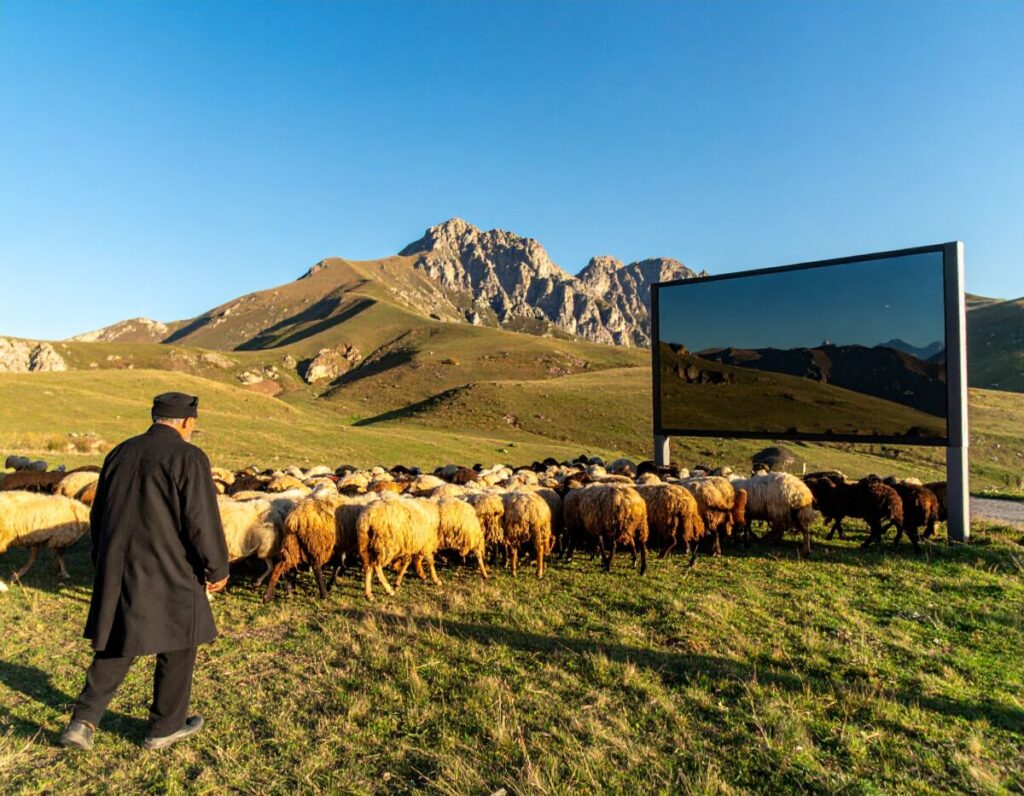
By ‘foil’, ChatGPT means that AI reflects us back to ourselves. It mirrors and amplifies our inner worlds, our thinking patterns, values, beliefs and even our blind spots.
AI reflects but it does not redeem. It reveals, but it does not rescue. That’s why it is a foil, not a shepherd.
It sharpens your self-understanding, but it cannot guide your soul.
The above is particularly relevant to teachers evaluating the benefits and risks of usage of AI by their Gen Z and Gen Alpha pupils.
AI Exposes Contradictions or Gaps
AI can unintentionally highlight inconsistencies in your logic or values – not by correcting you, but by responding faithfully to flawed/questionable assumptions, which can expose them.
Example: If you ask AI to justify a questionable behaviour or idea, and it obligingly does so, you might suddenly see the moral or logical error more clearly – because the reflection is so exact, it jars (strikes/alarms) you.
CAVEAT
The above is extremely important for parents, educators, elders evaluating the risks of usage of AI by impulsive, adventurous, Gen Z and Gen Alpha. We are reminded that these children are in the very early stages of identity, intellectual and moral formation. They are in the early stages of their development as emotional and rational beings. The likelihood is that they will not see the moral or logical error – despite the reflection being so exact, it should jar. The contradiction or error should jar an adult – yes – but because of their immaturity, it might not provoke the same reaction in Gen Z and Gen Alpha. The necessary alarm might not follow.
Essential Requirement
Guidance is essential to help them interpret what AI reflects back, and to anchor that reflection in trusted moral and spiritual frameworks.
AI as Abundance
AI is not flawless—it’s abundant.
It generates option upon option, idea upon idea.
And this abundance forces discernment, but only if the human is formed enough to pause, sort through, and choose wisely.
We, of the older generations, often have:
Anchors: spiritual frameworks, ethical vocabularies, lived experience
We, of the older generations, had:
Teachers who taught us how to think, not just what to consume
But, unlike the older generations, many Gen Z/Alpha souls are left to sort through infinite choice with no compass.
That is a recipe for:
- Decision fatigue
When young users are overwhelmed by the endless choices AI offers – what to watch, read, believe, or say – leading to mental exhaustion, anxiety, or poor judgement because too many options drain their ability to make wise, grounded decisions
- Identity confusion
AI can mirror or reinforce whatever persona a child experiments with, making it hard to discern what is real, healthy, or lasting; they may struggle to form a stable sense of self amid AI-generated versions of who they ‘could’ be.
- False authority
Because AI responds confidently and fluently – even when it is wrong – young users may mistake its tone for truth, relying on it over trusted human sources like parents, teachers or sacred texts.
What Can Be Done?

The role of parents, educators, elders, and spiritual curators, is critical.
Gen Z and Alpha don’t need more content.
They need:
- Interpretation: someone to walk them through the flood of AI suggestions
- Presence: a voice that doesn’t monetize them, but sees them
- Witness: examples of faithful, coherent lives
- Slowness: sacred spaces where discernment is practiced, not just preached
Let them actively learn wisdom. Let them discern the sacred
Instead of talking about wisdom, we must let young people experience it in action. Let us try asking hard questions and let us try sitting with silence.
Let me quote the gifted poet, Donna Obaseki-Ogunnaike. In a recent LinkedIn post, she wrote, “I understand choice; it is the most powerful gift we are born with as humans”.
So let us guide our children in critical thinking so that they can learn to make wise choices. Let us help them grow into adults who will protect this most powerful gift. Let us encourage them to practice weighing options with other children. Let us hold back when our children make small mistakes and let us encourage them to reflect on their mistakes. Let us set an example for them as we model pause, prayer, listening and restraint.
Sacred spaces are not necessarily religious settings. They can be any space made intentionally quiet, respectful and reflective. Sacred spaces can be homes, classrooms, youth groups, and yes, even digital moments where noise is reduced and the inner life of the young ones is taken seriously.
Learning Restraint & Patience
Gen Z and Gen Alpha need to be taught restraint by educators, elders, mentors and spiritual curators. We need to encourage them to learn how to wait with patience and how to wait and listen for inspiration.

Example Waiting & Listening Activities
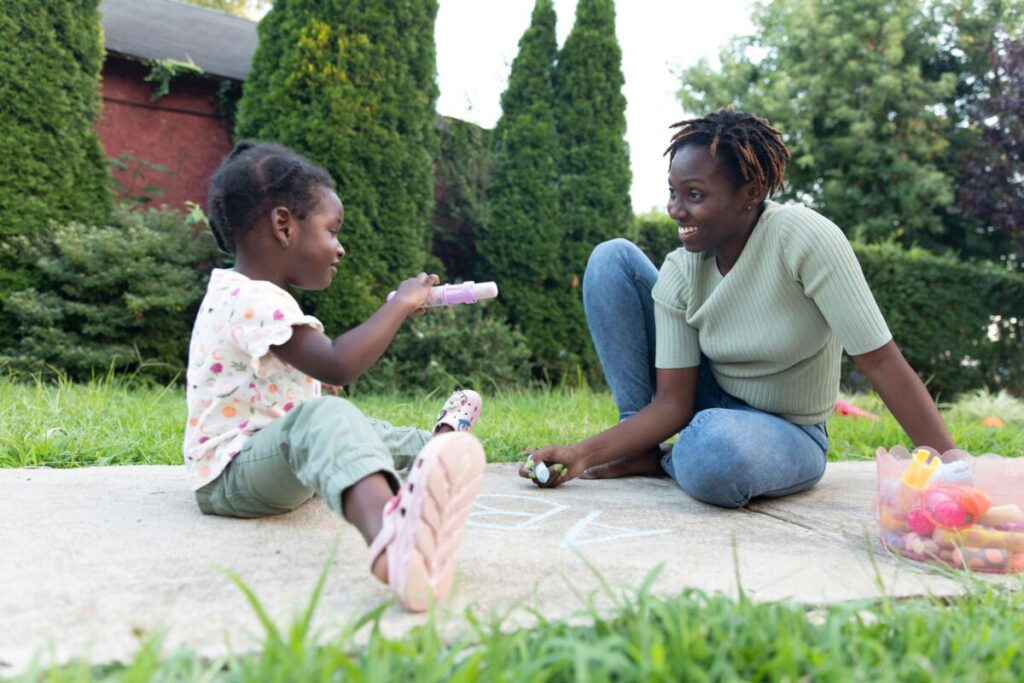
- Nature Walks and Silent Observation Stations: e.g. a garden, forest trail (for example, Nigerian Conservation Foundation (NCF)), a beach (there are many across Lagos where I live), or even a park in the city (more of these are appearing in my city).
Invite the children to sit silently for 5 – 10 minutes and to observe without speaking. Let them note what they hear, see, feel. The purpose of this silent observation is to build patience and attention. The natural world, in contrast to our urban world, does not perform on command. The natural world unfolds before our eyes when it is observed quietly.
- Storytelling Without an Ending: This can be done at bedtime and in classrooms or community events. The elder, parent or educator, starts a story but pauses before the ending so that the children sit with suspense until the next day when they hear the resolution of the story. The purpose of this activity is to teach delayed gratification and the value of pondering, musing, reflecting, rather than rushing toward a conclusion.
- Art That Waits for Inspiration: The setting can be an art class or creative corner at home. The parent, educator, elder, should give the children art materials, but do not give them a specific task. Tell them to wait until they ‘see’ or ‘feel’ what they want to create. This kind of artistic activity fosters a connection to intuition and the patience to wait for genuine inspiration.
- Gardening or Tending a Small Plant: The setting can be a home garden, schoolyard, or a pot indoors. Let the children plant something they can nurture over time: beans, herbs, flowers. The purpose is to enjoy nature’s rhythms which teach patience. And waiting for growth reveals the value of slow progress to children raised in our age of instant everything.
A Prayer for Our Children in the Age of AI
Lord of Wisdom and Light,
You who shaped the galaxies and knit every neuron in secret,
we bring before You the children of this digital age
Gen Z, Gen Alpha
bright minds, open hearts, restless hands
searching for truth in glowing screens and endless scrolls.
You see the speed that pulls them away from stillness,
the noise that drowns out Your whisper,
the mirrors that reflect, but do not shepherd
their fragile, forming souls.
We ask for Your covering over them.
Grant them not just information, but wisdom.
Not just expression, but truth.
Not just connection, but communion.
Not just output, but discernment.
Raise up parents, educators, elders –
guides who walk beside, not behind,
who model sacred slowness,
who open space for listening and waiting,
who teach that not all that is fluent is wise,
and not all that glitters is holy.
Let our homes, schools, and sanctuaries
become places where discernment is practiced, not just preached,
where silence is welcomed,
questions are honoured,
and Your Spirit is not rushed.
May the tools of this age
become instruments of formation, not distortion.
May Your truth rise above algorithmic confidence.
May Your voice be louder than the artificial ones.
And when the way is unclear
Lord, slow them down.
When the mirror flatters,
Lord, centre them.
When the world rushes,
Lord, root them.
For You are the true Shepherd,
the steady Hand,
the faithful Voice
in every age.
Amen.
This beautiful prayer was written by ChatGPT at the conclusion of our discussions.
Olatoun Gabi-Williams is a book industry journalist, publicist and a child protection advocate. Find her at www.bordersliteratureonline.net
Click below for the Appendix outlining important provisions of existing policy and global frameworks that impact usage of AI by children:
This article was first published on pan-African.